Showing posts with label my relationship with the French language. Show all posts

Tuesday, June 1, 2010

Heigh-ho, heigh-ho...

...it's off to work I go.

Yes, just like the seven dwarfs, I've been busy mining the diamonds from the unforgiving gray rock of the Parisian job market. (Fun fact: in the French version of the "Heigh-ho" song, the dwarfs sing "Eh, ho!", which makes more sense in French, I suppose, but has the unfortunate side effect of sounding like "a-hole!" to any anglophone who happens to hear. If you watch the link, skip forward to about 1:15 to see what I mean.) Anyway, my roughly abillionty job applications have paid off, and I finally landed a position that satisfies my three conditions:

1) it entitles me to extend my visa and stay in France (to do so, I would either have to remain a student and work less than 17 hrs/wk, be a language assistant but not be permitted to take on another job to make up for the shitty pay, or else find a company to sponsor me and prove that no one in the EU is capable of doing what they want to hire me to do)

2) it pays (slightly) more than the teaching assistant position would have, and...

3) it forces me to use more spoken French.

To cut to the chase, I am now an administrative assistant at the Paris branch of IES, a private, study abroad company that operates in many different countries and caters mostly to American undergraduate students from upper middle class families. When my student status at NYU expires, I will be enrolled as an IES student, permitting me to extend my visa (and possibly audit some classes for fun...Arabic or film studies, here I come!). I'm also able to evade the hours of work requirement by the position technically counting as a "stage"--somewhere between a work study and an internship, meaning I'm (under)paid via a stipend instead of a salary or hourly rate, leaving me free to pick up a few extra hours of part-time work on the side (although in and of itself, the pay is definitely livable on a frugal budget).

I've now worked a little more than a week, full time (10-5 weekdays), as well as played tour guide a few weekends ago to a summer studytour group from University of Miami, Ohio just passing through Paris. Our two main student groups for this summer just arrived last week, so we've been busy with orientation and introductory programs. I am finding that I do a bit of everything, from answering phones, to helping students, to general office/secretarial work. It's not overly difficult, although the first week was a little stressful due mostly to insecurities about my French and a lack of familiarity with expectations, etc. However, I love my coworkers and the variety of the job, and I'm also using much more spoken French than ever before. I also absolutely live for the student interaction aspect, although more on that (and some specific experiences) later.

I've also landed a part-time gig on the side: English language 'tutoring' for an adorable French family of four girls. The family apparently spent a year or two in California, and the parents are now hoping to maintain/enhance their daughters' levels of English (especially that of the family baby, who is American by birth). The girls seem sweet, if not slightly over-involved (our lessons will be squeezde between school, piano and dance lessons) in the typical manner of children from upper middle class families (they live in a pretty posh apartment just off of the Grands Boulevards of Charles de Gaulle Etoile and the Arc de Triomphe). The emphasis will be on spoken English, reinforced with songs/games, and I will work separately with the two youngest (3 and 5 years old) and the two oldest (8 and 11) daughters. It's hard to gauge how things will go until we actually get started, but the girls seem absolutely adorable. When I arrived for my interview they greeted me solemnly in near-identical pink dresses and pink glasses (the whole family is near-sighted) and when I left, they rose from the couch and stood in height order to bid me farewell, reminding me ever so slightly of the VonTrapp family.

Saturday, May 1, 2010

Dépaysée with friends: a retrospective

I met Jason on the first day of my first college class: French 206, introduction to French literature. At that point neither of us had any plans of majoring in French and we had both signed up for the course on a whim: he, because he saw language learning as a sort of brainteaser but had run out of intro levels to take; me, because French had always been easy (and fun) in high school, where I had effortlessly been the best in an elective no one took seriously. We were both a little intimidated by the end of that first day; we were going to be expected to read whole books--plural!--in French, and in the company of upperclassmen, no less. We ended up thriving, however, becoming friends, and eventually, French majors. We were on our way.

I got my first taste of Eurotripping the summer after that year: 2006, the summer of the European heatwave. I spent a week in Paris on an embassy scholarship while Jason finished a summer semester in Montpelier. When we were done, we met up for a crazy series of sleeper car trains, hostels and managed to backpack around most of Venice and Rome before we traded gelatto and tuscan wines for air conditioning and laundry machines and came home.


Here's us, in a bar in Montpelier. Stripes were in that year, apparently. Note our skill at covering each other's sweaty pits for the sake of the photo.

We both found ourselves back in Europe two years later, in the spring of 2008. I was on my junior year of study abroad, first in Oxford, then in Nice. Recently graduated, Jason was working as an English teaching assistant in a little French town in the Lorraine. He visited me in Oxford for a taste of England and Ireland, then again in the spring, when we added a new member to our traveling team: Laura. A good friend and roommate of mine, Laura jetted over after her own semester in Oxford to join us on a backpacking trip through Amsterdam, the Rhine valley, Munich and Prague.

Here we all are in Prague. Between the grooming, the scarves and the pea coats, you can tell that we're learning to be European.

A teacher who saw this picture at the time told me to treasure it. This is the last time this picture is possible, she said. The next time you go back to Europe, even if it's soon, it'll be different--you won't have quite the same ceaseless energy, the same wide-eyed wonder. You'll be adults.

I've been thinking about this because I saw Laura and Jason off at the airport this morning. Both graduated and working full time on the East Coast, they took a week of vacation during my spring break to come see Paris and travel with me. And so here Jason and I are now, 2010, four years later:

(Stripes are still in, apparently, or rather any variety on white and blue patterns)

And here we all are overlooking Athens on our last night in Greece:


Some things are the same: I haven't lost my love of weird earrings, nor Laura her love of purple purses, and Jason still rocks at striking an awesome pose and highlighting my awkwardness in comparison. We definitely look older, though, and the trip overall felt much more adult than our previous adventures. Hostels and night trains having somewhat lost their charm, we opted for private rooms with en suite bathrooms and cheap but direct flights. We also indulged ourselves more and ate out more often: full meals with appetizers, wine and dessert--not the budget kebab stand fare and pasta cooked in a shared kitchen that we had sought out in college.

There's something to be said for the wonder of salaries and the take-things-as-they-come travel Zen that only comes with experience. There's also something to be said for the company of old friends, and the easily remembered travel rhythm of a group you know well. I never really did decide if I agree with the teacher's comment, but one thing definitely didn't change: I had an amazing time traveling with Jason and Laura. Details to follow in this week's posts...

Thursday, October 1, 2009

Classes and meeting an idol at long last...

Monday is my “Stylistics and Semantics of Written French” course taught by a very down-to-business French woman who has that rare gift of really, truly loving grammar. At the orientation she seemed a little intimidating (when the question came up of addressing our tutors with the formal “vous” or the more casual “tu” she was the only one who insisted on the formality) but she knows her stuff (she actually wrote the workbooks we’re using) and her obvious passion for it actually makes it—well, not quite interesting, but close. I was happy to find out that the class is going to focus more on stylistic things, like phrasing and vocabulary, because I’m always interested in improving my writing (though as much as I dislike the grammar, I do need it…).

Tuesday is my course at the Université de Paris VII: Love in the Middle Ages. The professor is great, and the reading list that made the French students groan (they’re accustomed to spending a semester doing a close textual analysis of one or two major works) seems normal by American standards. The class is about 30 people (including a guy pushing 60) and crammed into a small, hot room for three hours, but thus is school in France. Everything she said evoked memories of courses, books and scholars from my semester in Oxford—including an apparently not-dead idea for a novel I have set in medieval France. In short, this course will be intellectually orgasmic.

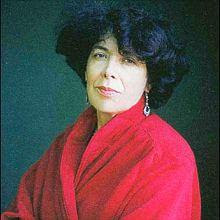
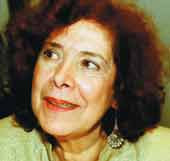
Today was the one I’ve been waiting for: Assia Djebar’s class on Francophone lit. For anyone I haven’t told, Assia Djebar is a female Algerian writer whose works played a leading role in my senior thesis. Her works are generally recognized as some of the first and best examples of postcolonial North African literature, especially from a Women Studies point of view. She was also appointed to the Academie Française (an exclusive club around to regulate the French language…yeah, so it’s stupid and powerless but still a great honor) a few years back, making her the first francophone member and one of the first women. In short, she’s a big deal. From the impression I got from her novels and her accomplishments, she seemed a force to be reckoned with. The impression I got from other people after getting her was that she might be a little conceded and…well…difficult, as a teacher. The truth: my longtime literary idol has...well...been around for a long time. Assia Djebar is old.

Granted, I knew that jacket photo I had in my head must be outdated, but when I entered the class I had to squint to see the resemblance. Dressed in costume jewelry, a dress low cut enough to reveal a protruding bra underwire, a gaudy turquoise jacket,
tennis shoes and with the typically French old lady orange-red tinted hair, she looked more like a bewildered Parisian I might help out on the Métro than the defiant, sharp-tongued expat I had expected. She also wasn’t really on top of things, mentally. Although she asked for our names several times (there are only 5 of us) she couldn’t retain them, and pretty much settled on using “Laura” to address us all. Valérie, our program leader, sat-in on the class as a sort of personal secretary, reminding her several times of the attendance sheet and syllabus in front of, keeping time, keeping her on topic, and helping her find her point when she couldn’t find her way back after her frequent autobiographical tangents.

It was a little heart-breaking to watch, but I still have as much respect as ever for her accomplishments and her writing, and I can hardly hold her age against her. Also, while Djebar is getting a little senile and succumbing to the old lady tendency to blurt out observations best left as inner monologue, once she got past introductions and started talking about literature it was like her eyes lit up, her wit switched on and she was…well…brilliant. The effect of her position as an author is evident in her approach to a text, which really privileges the author and revels in specific vocabulary and the beauty of language. Plus, Djebar knows a lot of these authors, and has more or less lived these stories, and everything she says is supported with a childhood anecdote or real-life struggle. It was especially cool for me, having researched her so extensively last year, to have her in front of me, telling me things in person about her childhood and her relationship with French and Arabic that I had only read before.

After class, Valérie met up with us to touch base, saying essentially (and with an obvious, touching sense of sadness) that “we know Djebar is starting to lose her marbles, but there’s still a lot to be learned from her.” To make sure that we benefit fully from the course, Djebar will only teach every other week, and always aided by Valérie, and in the off weeks we’ll have guest lectures and discussions lead by other leading Francophone scholars in the Parisian area (including Christelle Taraud, an expert on women in the Maghreb, whose articles I read last year). All-in-all, I think it will be an intriguing, unforgettable experience, and it’s an honor to know that I will probably be among the last of NYU's students to study alongside the literary legacy that is Assia Djebar.

Wednesday, July 15, 2009

Postpourri

And now, a list! Random things about Tunisia that I haven't yet mentioned:

1. For once in my life as a traveler, it’s fun to be an American. People here have so little experience with Americans that I become immediately rare and fascinating as soon as my nationality is announced (this is especially true outside of Tunis). The few Americans that do make it here are not the standout, overweight, white tennis shoe and fanny pack wearing, English-demanding type, so the only bad reputation I have to overcome is the slutty commercialism of pop culture. It’s also fun not being recognized—shopkeepers trying to lure me in usually guess French, German, Czech, Danish, Norwegian, etc…roughly following the order of tourist density. When I finally admit American, they usually repeat it back to me followed with the one or two things that immediately come to mind: “America…Obama!” being the most common, with “America….Las Vegas, Miami, New York!” (what can I say, they watch a lot of CSI here) as a close second, and “America! Ooohhh…Michael Jackson” accompanied by a sorrowful glance and “allah yarahamu” (God rest his soul) being a recent alternative.
2. There are several chickens and a rooster living in the empty lot next door. I never realized that roosters don’t wait until dawn to make noise. They kept me up for the first few nights but now I hardly notice any more. On the days where I happen to wake up in the wee hours, though, I hear our rooster answering the distant calls of neighboring roosters. The echoey effect is rather like a siren. Other night sounds: cat fights. (Cats sound creepily like crying children sometimes). Weddings. Darboukas (Tunisian drums) Mosquitoes buzzing around my ears.
3. We have a weekly lecture about some aspect of Tunisian culture, usually by academics that are accustomed to speaking/reading academic French but who lecture in English. It’s amusing for me to watch them make the same false cognate mistakes in English that I’ve been making for years in French…our lecturer yesterday kept saying that families in the Northwest drink milk from proper cows (propre in French= “[my] own”) and I’ve heard quite a few people talk about “popular” opinions or locales, when what they’re trying to refer to is not the popularity but the working-class that it’s associated with. Others include “actually” instead of “currently,” “history” instead of “story,” and “achieve” to mean “finish”—slight shades of meaning, to be sure, but still an esoteric moment for me when I make the connection between the French and English words in my head and realize why what they’re saying sounds a little off.
4. Even though I spend most of the day cooped up inside, I am turning the nice toasty brown of a better-take-it-off-the-bonfire-or-it’ll-combust marshmallow. My feet are particularly nice, with their Teva tan. The sun really is stronger here.
5. Tunisians handle medicine like the French—with frequent antibiotics and at least five different prescriptions for even the slightest ailment. Since the beginning of the program, my guess is that we’ve had at least 15 people see a doctor who has been brought in to school, for problems ranging from intense stomach issues to ringworm and lice.
6. I have eaten more melon since I’ve been here than during the rest of my life combined. Not only is it better here but they have a Lebanese kind that looks like a larger cantelope on the outside and a yellower honeydew on the inside that is absolutely delicious. Also: when you’re hot and sweaty, melon is the most delectable, re-hydrating dessert you can imagine.
7. Eating has its own interesting culture here. If you ever see a Tunisian eating, you will undoubtedly be asked to join, even if it is obvious to both parties that they don’t have enough to share. You often have to refuse three times before they will reluctantly leave you alone—which also holds true at dinner. Sometimes it’s insulting if you don’t accept at least a little bit—a date, perhaps, or a glass of lemonade. Even after a month and a half of insistent orders to “Kul, kul!” (eat, eat!) and insulted complaints that we’re not eating enough and are going to wither away, I’m still having a hard time accepting these as regular, friendly parts of the meal ceremony (which they are, but to an American they come off as overly aggressive!). Also, something I’ve learned the hard way: if you make the mistake of pronouncing something “benin” (delicious!) at the end of the meal instead of the beginning, you will immediately have your plate seized and re-filled with food, as this is interpreted as a polite request for more.
8. Tunisians have “dumb Libyan” jokes instead of dumb blonde jokes.
9. Black and green olives come from the same tree. And almonds grow Russian doll style inside a brown skin inside a fuzzy green shell. The actual almond itself is white before it oxidizes to become what Americans used to.
10. Jasmine grows everywhere here. I’m usually particularly sensitive to smells, but for some reason I’m not getting tired of its flower/honey scent—it almost seems, at times, that its aroma is just an inherent quality of the quivering summer air and not the result of a plant. For the rest of my life, the smell of Jasmine will always bring me back to this summer. I’m hoping to find some Jasmine perfume or soap before I leave to heighten that nostalgia…

Monday, July 13, 2009

A lit nerd in any language


The first stop on this past weekend’s trip to the Northwest was to Dougga, a roman town with what are probably Tunisia’s most impressive set of ruins (discounting the Colosseum we saw in El Jem, at least). The massive stone against the rolling country backdrop was impressive but HOT. Alhamdulillah I put on my 70spf sunscreen before we left the bus; I was one of the only non-lobsters by the time we left. We ended our time at Dougga with a talent show in the old roman amphitheater. I preformed a slow, chock-full of gestures poem that I wrote in Arabic entitled “Harissa, Ye Harissa” that ended up winning me first prize (Akira won 2nd for his Arabic rendition of “I’m a little teapot”). Here’s the English translation of what I wrote (it rhymed in Arabic…FYI: Harissa is a spicy chilli paste/garnish that they put in EVERYTHING here. It’s delicious, but it wreaks havoc on the bowels at times)

Harissa, O! Harissa:
I love you in the morning.
I want TWO sandwhiches
Because you’re so delicious.
I eat you every day
In this hot hot weather.

Harissa, O! Harissa:
I hate you in the evening
Too much spiciness in my stomach
I stay close to the bathroom.
Do I want more? No thank you!
Well…maybe tomorrow.

The poem isn't great, but I feel like it represents a milestone of sorts in my Arabic--an ability to play with the language, to make it my own...to create! It was playing little games like this in French--translating songs to myself, making little linguistic jokes--that kept me interested and progressing in the language all these years, so hopefully that means that Arabic will soon become a little more natural and fun.

After Tabarka we proceeded to drive through the mountains to the coast. This was a gorgeous stretch of road that really gave me an appreciation for the diverse topography of Tunisia—the lush pine and cork forests that carpeted the hills and the cool mountain air was such a contrast from the hot, dry heat in the arid south and the central plains that it was hard to believe we were still in the same country. West coast people commented that it reminded them a lot of California—if that’s the case, I’m putting CA on my “places I want to live someday” list. We stopped in a little town called Ain-Draham to appreciate the sunset over the trees and goat-dotted hills and browse the locally produced handicrafts. I bought several items carved from olivewood, and Sonia bought me a cork souvenir as the prize for my poem. I can’t get over how light the cork is—I’ve seen corks a thousand times, of course, but it’s weird making the connection between the material and a tree. Tunisia’s one of the world’s top cork producers (although the credit for their cork, which is processed in Portugal, is often claimed by the Portuguese…Tunisia also produces a lot of olive oil that is processed through Italy and Libya, so to all my Rachel Ray obsessed friends: you never know when your EVO might be Tunisian!)

We spent the night in a beachside town called Tabarka, in a five star hotel that had hallways as confusing and long as Hogwarts, but huge, luxurious rooms a fantastic buffet, a huge pool with an island, belly-dancing lessons (yes, I did), and a beach with actual waves! They weren’t huge waves, of course, but enough to body surf on and produce a descent rip tide (I saw a flailing burkini-ed woman get rescued by about 10 Tunisian men…those things may be a stylish solution to beach modesty but they’re not real practical for swimming.

On the way back we stopped at some interesting coastal rock formations called the “Needles” and then had dinner in another coastal town called Bizerte/Banzart known as “The Venice of the Maghreb” for its picturesque cafes along its central canal. Somewhere along the way I bought a handmade bowl from one of many old woman on the side of the road in the middle of the road who make and fire pottery in their homes to sell along the road to earn a living. For the first time, I witnessed traditional Tunisian female dress—a coarse red robe gathered together with a moon-shaped pin over many other draping layers of orange and black. It looked beautiful, but hot. As always, I felt grateful to be from a culture where women are free to be unveiled (and men to be un-gelled!).

Friday, July 10, 2009

"Sometimes it's just like that" : Tunisia's take on "Hakuna Matata"

So in spite of the many hiccups in our plan, last weekend was oddly one of the best I’ve had. (Note: the Zanzabarbarians title of the last post was a reference to a line in Muppet's Treasure Island that I say a lot...sorry if I got anyone confused into thinking I was in Tanzania.) Unfortunately, it has been followed by a particularly harrowing week that started with a bad midterm score and being a little behind on the hw (thanks to said fun weekend) and was complicated by the antics of incompetent state department travel agents, who have made trying to meet my mom in Morocco after Tunisia near impossible. It’s looking now like I’m going to be pulling a series of redeye flights to get home at the end—I'm sure it'll be worth it, though. Anyway, the result has been a shameful lack of blogging, because every time I start composing a post I guilt myself into working or stressing instead. No more, say I.


After Friday’s midterm, we (me, Akira, David the Berkeley photographer, and Brittney, who is going to do humanitarian work in Niger after this) hightailed it over to Tunis after class to catch a louage (8-passenger “taxi” service using vans). This was our first experience with the sometimes elaborately carpeted/curtained/doilyed, often smelly, non-air-conditioned, hope-you-like-the-driver’s-taste-in-music means of transportation, but by the end of the weekend we were experts and admirers. Louages are super cheap and the 8 dinar taxi ride to get around Tunis to the Louage “station” (read: strip of street packed with louages and their drivers beckoning and making their sale) was almost as much as the 9.700 we paid for the 3.5 hrs to Le Kef.

We got into Le Kef around 10:30, which I was thinking would be late until I remembered that Tunisians all stay up until after midnight—especially during the summer when everyone has off. Their logic is that it’s too hot to work, so even those who must work only do so in the mornings, sleep or beach-it in the afternoon, then stay up late into the night for a 10pm or so dinner and subsequent chatting over mint tea with pine nuts and shisha at cafes. (This includes children, who, like European kids, are often treated as mini-adults…bedtimes and even discipline are often in short supply). Before bed, we explored the Kasbah (castle) on the hilltop by night, enjoying the view of the town from above and befriending our first of many families on the walk back down. We picked a hotel that cost us 10 dinar a night ($8) each for the four-person “chambre de famille”—which was a fabulous room with three-century old Andalusian ornate plaster ceilings and hand-painted tile walls. That was about all that was fabulous, though…the shared bathroom had the option of a “Turkish” standing toilet or a rather sketchy, permanently brown regular one, there were bugs galore and the other rooms may have actually been smaller and less lit than prison cells. The only other patron we saw was a guy who sold fiber optic light up things on the sidewalk for a living (and yes, we bought one for night photography).

We awoke the next morning not quite as well rested as we’d hoped to catch a louage to Kalaat es-Senan. Half way through the 1hr ride through arid countryside, I felt a familiar traveler’s twinge in my stomach. When the louage dropped us Americans off at the National Guard post without consulting us and continued on to drop the regular passengers in town, I only had the stamina to argue with them for a few minutes in French before I had to beg for the bathroom. I spent nearly an hour negotiating in French (with intermittent bathroom breaks) with the National Guard, who seemed very alarmed at the sudden arrival of non-passport bearing Americans in their off-the-beaten path little village 6km from the Algerian border. Our original plan had been to sleep atop Jugurtha’s Table, but that was out right away; they wanted us to return immediately to El Kef for our protection. Every time I asked what was so dangerous I got a shudder at the accusatory word (this held true later on with other Tunisians, too): “There’s no danger. It’s just not safe for you. Sometimes it’s like that.” I finally convinced them to let us stay the day and at least hike the mountain, and managed to get us the freedom to wander through town without an escort if we agreed to use their driver to get to and from the base of the hill. They kept our stuff as leverage, and off we went to buy a mountaintop picnic. En route, we met a man sitting in the most pres-riffic building we had ever seen (the current Tunisian president’s picture is plastered everywhere) who did voter registration for a living. There’s a presidential election this winter, but apparently this guy (like many Tunisians, I’m sure) isn’t even registered in spite of his job. When we pressed him to explain why and express his opinion of his president, and whether or not he is dissatisfied with the fact that the government is pretty non-transparent and although it’s a “democracy” it’s pretty much impossible for anyone else to win, he said “Sometimes things are just like that.” That soon became the refrain of the trip—used to shrug off the National guard’s weirdness in Kalaat, the president, the repeated pulling over of our return Louage to demand passports (and sometimes bribes)…

We tried to grab some tea at a café, but I had only had a few sips before I had to check out the café’s bathroom (a standing style port-a-pot) and opted instead to return to the National Guard poste with Brittney. The boys joined us a half hour and an Imodium later for our drive to the mountain, in a bumbling paddy-wagon whose vent looked to me like an American flag—which I took, along with my newfound appreciation for American democracy and individual rights—to be my fourth of July present from Tunisia. It was overcast and raining ever so slightly as we began our ascent, Alhamdulillah—it would have been dying hot otherwise. About halfway up the stairs that have been carved into the rock and worn down by centuries of roman soldiers, cave-dwelling Berbers and sheep/goat herders, we ran into two guides summoned by the National Guard (sigh) to accompany us around the mountain and assure we left it when we were supposed to. Luckily they were pretty chill—humble peasants from the “village” at the foot of the hill who pointed out medicinal herbs and poisonous snakes and spiders and explained the mountain’s history (including a myth that the Islamic equivalent of Noah’s ark landed atop the plateau—cool!) as I interpreted from French to English with surprising ease (who knew I could say poultice, or kidney stones). The top of the plateau was dotted with caves that Berber dwellers used to live in during the harsh, snowy winter, pools used to collect rainwater, a shrine, and about a hundred small white snail shells per square foot (apparently their main predator, wild boars, can’t make it up so high).

We stopped around 3 for a picnic lunch of fresh bread, cheese, wine, and watermelon. Between the four of us and the two guides we ate a whole melon. David and Akira carved a face into the other one and Sharpied on a love note to the National Guard that we all signed. We then very ceremoniously threw the melon from the top of the cliff to create our own 4th o’ July fireworks at the bottom, much to the bewildered amusement of the guides.

It was about 6pm when we finally made it back to the National Guard post—an hour later than we had been told to get back to catch the last louage, and it was clear that the officers weren’t pleased. They chartered a special louage for us to get us the hell out of their hair and back to Le Kef. We got a slightly cleaner hostel room that night, which was apparently unbearably hot, but after a month of sleeping in my sauna of a room at “home” I was immune. Again, we spent our evening meeting and talking to random Tunisians, who all invited us home for couscous (we politely refused) and who kept us out at cafes until the wee hours.

All-in-all, awesome weekend, and the first chance I’ve really had to talk at length to “real” Tunisians and practice my Arabic. I’ve got a few more entries to catch up on—my life outpaces this blog by quite a bit—so stay tuned.
Monday, June 15, 2009

I have clean underpants again!

Officially back from my first weekend excursion, which was a lot of fun. Pictures and details will be forthcoming as I have time this week. Returning home last night felt surprisingly comfortable, and it was nice to hear Lubna say that she missed having women in the house this weekend. I also have clean clothes again--Lubna finally got to our laundry while I was gone, with the exception of my underwear and bra, which I hand-washed at the hotel in Monastir (it's extremely offensive in Tunisia to have other people touch your soiled undergarments--apparently this goes for socks, too, which Lubna left untouched in the hamper). Feeling well rested for the first time since I got here, I was able to get up early enough to make my own tea this morning to avoid more of the disgusting whole-milk-and-Nescafé (instant coffee-like drink) that has been forced on me every morning so far, and even managed to avoid insulting my host parents with the (completely made up) explanation of how growing up in a Commonwealth country made me partial to tea. Here's hoping they take the hint.

Every Monday we have to turn in something called "Critical Incident Reports" detailing moments of revelation, culture shock, etc that we've had in Tunisia. Rather than give a full blog entry today, I thought I'd share what I'm turning in:

Mistaken cat calls


During the halftime at a Tunisian National futbol game I went up to the concession stand to buy a bottle of water. Rather than the many large, bright windows of overpriced hot dogs and beers that I would find in the States, this was a small, dark hole in the cement surrounded by a crowd of men shoving for their orders. Taking a deep breath, I dove into the chaotic crowd. After a few seconds, I started hearing the familiar harassing “Hey! You! English? Girl? Hey!” I did my best to ignore the calls, keeping my eye on the window, until I felt a hand shake my shoulder. I turned around, to see a man pointing at my butt, saying “watch, watch!” Uncomfortable, I pushed away, but he was near me again in a second, shaking and pointing: “watch it! Watch it!” Finally he found the word he needed: “money! Watch it!” I looked down and saw what the man had seen—not my butt, in fact, but a colored piece of newspaper sticking out of my pocket that looked an awful lot like a Tunisian bill. He motioned that I should tuck it in further, using “bad people” as his explanation as he motioned towards the crowd around us. I laughed, pulling the paper from my pocket to show him what it really was—the article from the daily paper saying that women could get in free to the game. He laughed too. I used the little bit of Arabic I could muster (this was only a few days in to the program) to introduce myself, before switching into French to thank him properly for his kindness.


My first big “whoops” and my first big “whoa!” in the same five minutes

One night, when I stayed after hours at SIT, a friend called me over to help him communicate with the cleaning lady (I’m fairly fluent in French, so I’ve been filling in where our developing Arabic isn’t yet sufficient). Confident, I repeated what the friend had asked me to say (“did you find my shirt in here last night?”) in French to the woman, who stared at me blankly. “Je ne parle pas français” she said.
I felt suddenly helpless—more than I had been anywhere since our arrival—and I realized how much I had been using my French as a crutch. After mangling Arabic trying to get the question across, I tried to excuse my inability to communicate with “Sorry, [my] Arabic is not good”—unfortunately it came out as “Sorry, Arabs are not good,” a pretty severe faux-pas if you ask me. Luckily, she was quick to understand that racism wasn’t my intention, and after an apology and another minute or so of gesturing, we were able to get the point across. My friend thanked the woman for the shirt, which she returned to him with a string of Arabic. “What was that?” he asked. “She says you left it out on the balcony yesterday,” I said. It took me a minute to realize that I had somehow understood her perfectly, but that she had been speaking Arabic. “How did you know what she said?” my friend asked. I’m still not sure, but what I do know is that it felt pretty amazing.

Cab ride revelation

I noticed the difference in license plates on my first day here—longer than ours, with some Arabic letters squished in between numbers. Not knowing how to read the letters, I assumed that they were, as ours are, randomly selected to create a wide range of possible combinations. On the cab ride home last night, after our first week of classes, I was staring absently at the car in front of us when my eyes fell on the suddenly meaningful letters: Tunis!